France is one of Europe’s most attractive retail markets. With over 67 million consumers, a strong culture of in-store shopping, and a dense network of prime retail locations from Paris to Lyon, Marseille and beyond, the country offers exceptional opportunities for international brands looking to establish a physical presence. Yet entering the French retail market requires careful preparation, from navigating local regulations and planning permissions to designing a store that resonates with French consumers.
This guide walks you through every key step: the administrative requirements, the design process, the technical standards, and the choice of the right fit-out partner. Whether you are a global fashion brand, a luxury retailer, a food concept, or a specialty shop, you will find here the practical information you need to move from project to opening day.
1. Why France? Key facts about the french retail market
Before launching into the operational details, it is worth understanding what makes France a compelling, and sometimes complex, destination for international retailers.
A market driven by physical retail
Despite the rise of e-commerce, French consumers remain deeply attached to the in-store experience. France consistently ranks among the top retail markets in Europe, with Paris alone attracting tens of millions of tourists each year who are significant spenders in physical stores. French shoppers tend to value aesthetics, quality of service, and the sensory experience of a well-designed space.
Key figures
• France is the 6th largest economy in the world and the 2nd largest in the Eurozone.
• The French retail market represents over 500 billion euros in annual sales.
• Major retail hubs include Paris (Haussmann, Marais, Saint-Germain, Champs-Elysées), Lyon (Part-Dieu), Marseille, Bordeaux, Lille, and Toulouse.
• Shopping centres, high streets, and outlet villages all offer viable formats for international brands.
💡 Expert Insight:
The French consumer expects stores to reflect brand identity with precision. A generic, poorly adapted fit-out will signal a lack of commitment to the local market. Investing in quality interior design is not optional, it is a market entry requirement.
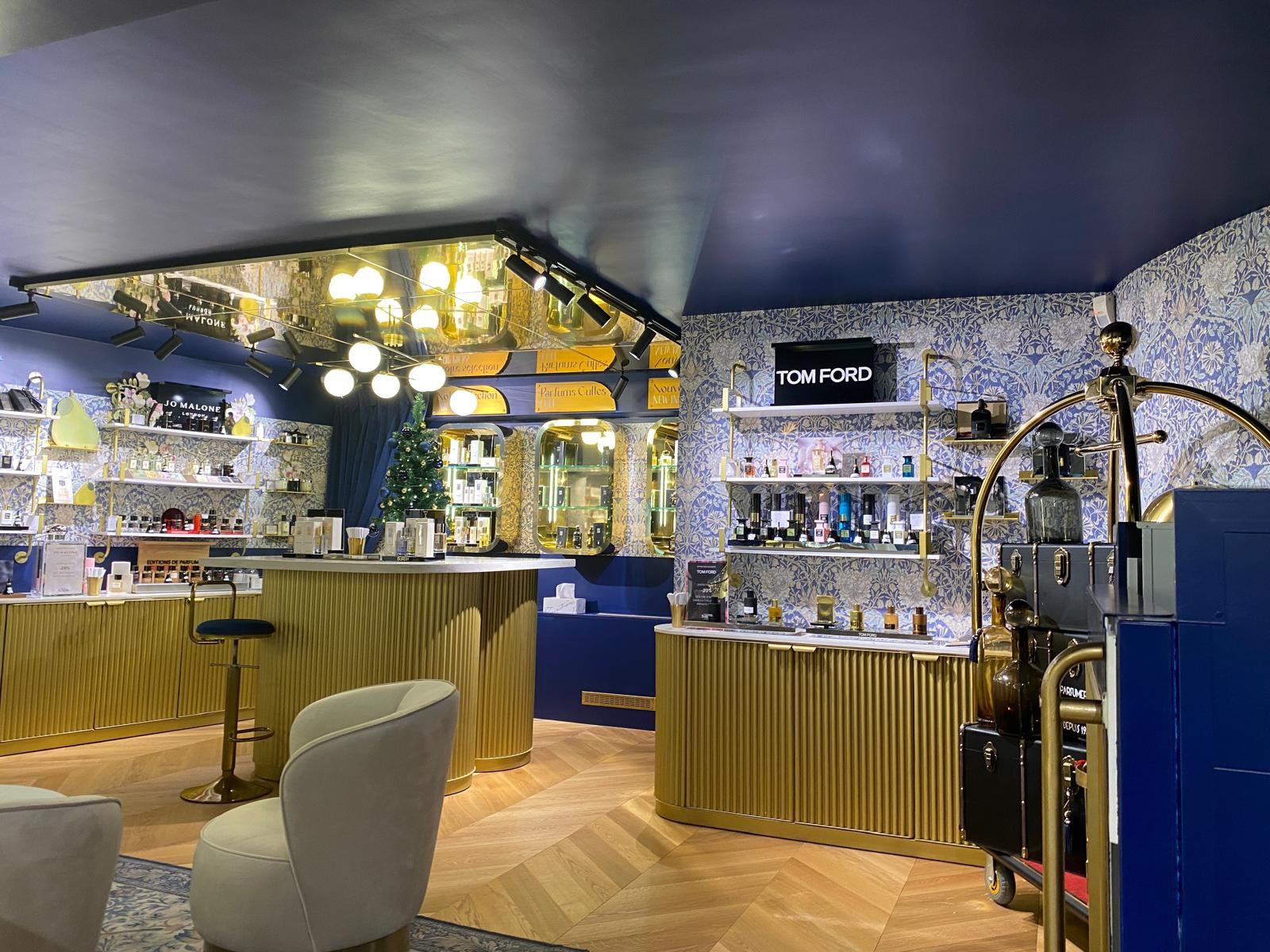
Projet fit out design by Groupe Pagès. View more here
2. Choosing the right location: retail formats in France
The location format you choose will directly shape your fit-out requirements, your budget, and the administrative steps involved.
High-street retail
Opening on a high street in a French city means working within an existing building, often a Haussmannian structure in Paris or a historical building in provincial cities. This involves specific architectural constraints: ceiling heights, stone facades, windows classified as historical elements. Permissions can be more complex, and fit-out contractors must have experience working within these parameters.
Shopping centres
France has some of Europe’s largest shopping centres, including Westfield Les 4 Temps, Val d’Europe, and Cap 3000. In these venues, you will be provided with a shell unit and must carry out all fit-out works yourself, within a strict set of specifications issued by the centre management. A dedicated fit-out guide will define dimensions, materials, signage rules, and timelines. Working with a contractor familiar with these environments is essential.
Retail parks and outlet villages
Retail parks offer larger footprints and easier logistics. Outlet villages such as La Vallée Village or Marques Avenue attract premium and luxury brands. Each operator imposes its own design charter.
Pop-up stores and temporary spaces
Pop-up retail has become an effective test-market tool in France. This format allows brands to evaluate consumer reception before committing to a permanent location. Even temporary spaces require a proper fit-out, adapted to brand identity and local safety standards.
3. Administrative and legal requirements
One of the most frequent stumbling blocks for international brands entering France is underestimating the administrative complexity. Understanding these requirements early is critical to avoiding costly delays.
Building permits and planning permissions
In France, any significant change to a commercial premises may require one or more of the following:
• Déclaration préalable de travaux (prior declaration of works): required for modifications affecting the exterior appearance of a building, signage changes, or limited internal restructuring.
• Permis de construire (building permit): required for major structural works, significant changes to the facade, or new constructions. Processing time can range from 2 to 6 months.
• Autorisation d’exploitation commerciale (commercial operating authorization): required for stores above 1,000 m², or in certain regulated commercial zones.
⚠️ Important:
Failure to obtain the correct permits before starting works can result in fines, forced demolition, and delayed opening. Always engage an experienced local contractor or project manager to handle permit applications.
ERP classification: Safety standards for public spaces
All retail stores open to the public in France are classified as Établissements Recevant du Public (ERP : Establishments Receiving the Public). This classification triggers strict fire safety and accessibility regulations that directly affect fit-out design:
• Fire compartmentalisation: walls, ceilings, and doors must meet specific fire resistance ratings (REI/EI).
• Emergency exits: minimum number, width, and signage of exits is defined by the store capacity and surface area.
• Fire detection and suppression: smoke detectors, sprinkler systems, and fire extinguishers must be installed according to the ERP category.
• Accessibility (PMR): the store must be fully accessible to people with reduced mobility, including adapted entrances, fitting rooms, payment points, and circulation aisles.
These requirements are not optional. They are verified by the Commission de Sécurité (Safety Commission) before any store can open to the public. A qualified French fit-out contractor will integrate these constraints into the design from the very beginning.
Heritage and architectural considerations
In protected urban areas (secteurs sauvegardés) or near listed monuments, additional approvals from the Architecte des Bâtiments de France (ABF) are required. This applies to a significant portion of prime retail locations in Paris and other historic city centres. Materials, colours, and signage are subject to stricter control.
4. The retail design process in France: from brief to opening
Designing a retail store in France follows a structured process. Understanding each phase helps you plan your timeline and budget accurately.
Phase 1 : Briefing and concept development
The process starts with a detailed brief that captures your brand identity, target customer, product category, operational needs, and budget. The fit-out contractor or interior architect will use this brief to develop a concept that translates your brand DNA into a spatial experience.
At this stage, key decisions include: circulation flow, zoning of product categories, fitting room quantity and placement, checkout and payment point design, storage, lighting concept, and signage strategy.
Phase 2 : Avant-projet (preliminary design)
The preliminary design phase delivers floor plans, 3D visualisations, material boards, and an initial budget estimate. This phase serves as the basis for discussions with landlords, shopping centre managers, and permit authorities. Approval from all parties must be obtained before proceeding.
Phase 3 : Technical design and permit applications
Once the concept is validated, technical drawings are produced: architectural plans, structural details, electrical schematics, HVAC (heating, ventilation, air conditioning), plumbing, and fire safety layouts. These documents are simultaneously submitted to the relevant authorities to obtain all necessary permits.
Phase 4 : Works execution
Works are carried out by the fit-out contractor, coordinating all trades: civil works, carpentry, electrical, plumbing, HVAC, signage, flooring, painting, and custom furniture manufacturing. In France, it is common for a single contractor to act as maître d’oeuvre (works manager), coordinating all subcontractors and ensuring compliance with the approved plans.
Phase 5 : Safety inspection and handover
Before opening to the public, an inspection by the Commission de Sécurité is mandatory for stores above a certain threshold. The commission verifies compliance with fire safety and accessibility standards. Only after a favourable opinion from this commission can the store legally open its doors.
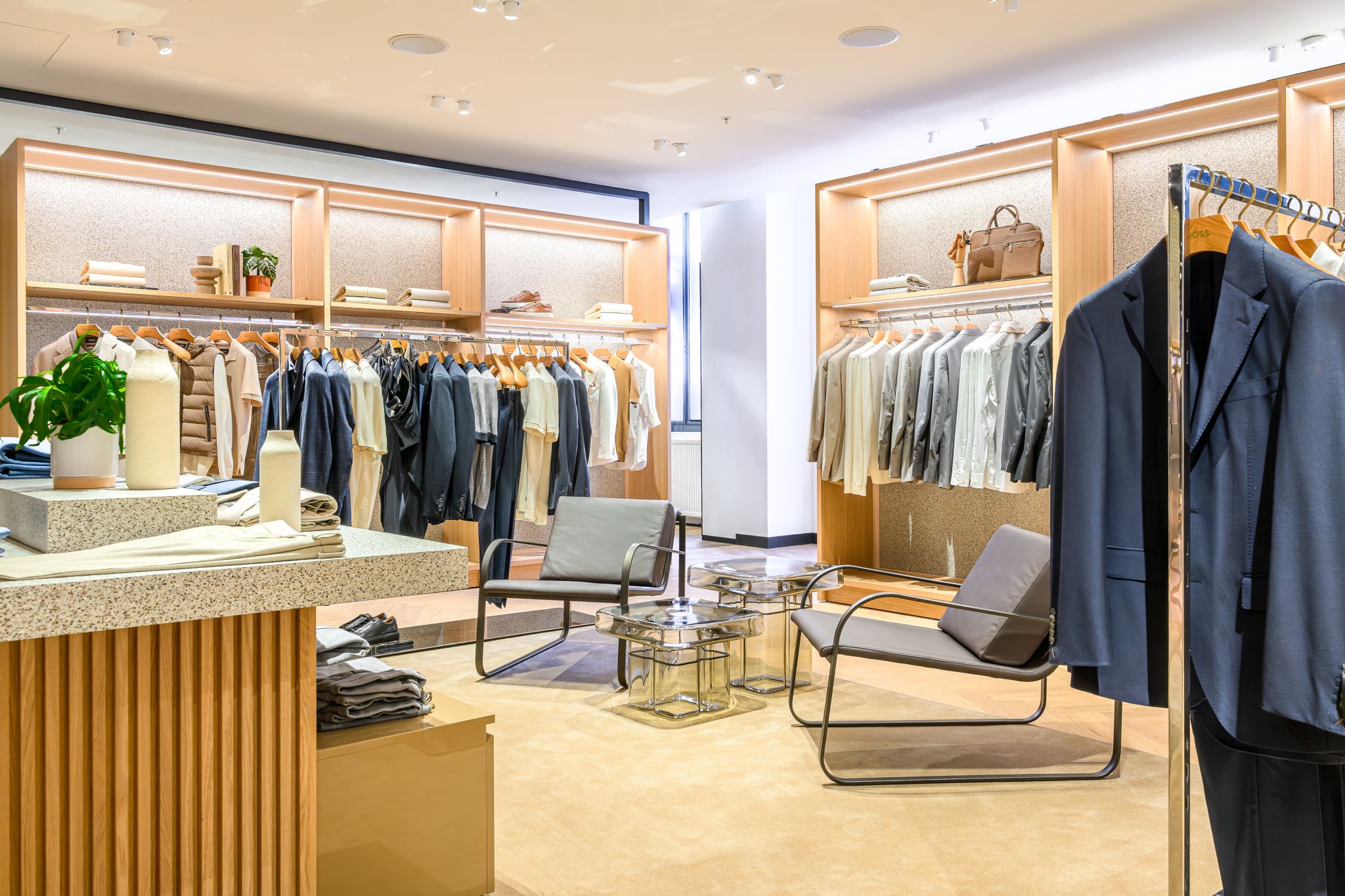
Projet fit out design by Groupe Pagès. View more here
5. Key design principles for french retail
Beyond compliance, retail design in France is guided by strong aesthetic and experiential principles. Here is what distinguishes successful store concepts in the French market.
Brand consistency
French consumers and industry professionals have a high sensitivity to brand coherence. Every element of the store, from the facade to the fitting rooms, must tell a consistent story. This is not simply about reproducing a global store concept: it means adapting it thoughtfully to local architectural contexts while preserving brand identity.
Lighting design
Lighting is one of the most impactful levers in retail design. In France, the trend has moved towards layered lighting systems combining ambient lighting, accent lighting for product highlighting, and decorative lighting to create atmosphere. LED technology is now standard, driven both by aesthetics and energy efficiency regulations.
Materials and finishes
French retail design tends to favour quality materials over quantity. Natural materials (wood, stone, metal), bespoke millwork, and artisanal finishes signal a premium positioning that resonates with French consumers. The use of sustainable or recycled materials is also increasingly valued, reflecting growing environmental awareness.
Circulation and customer journey
French customers tend to browse rather than rush. Store layouts should encourage natural exploration without feeling constraining. Clear sightlines, generous aisle widths, intuitive product zoning, and thoughtful placement of focal points all contribute to a positive customer journey.
Digital integration
Integrating digital touchpoints, interactive screens, QR codes, digital price tags, or self-checkout terminals, is increasingly expected in new store concepts. These elements must be seamlessly integrated into the physical design, not bolted on as afterthoughts.
Sustainability and energy efficiency
France has stringent energy efficiency regulations for commercial buildings. The Tertiary Decree (Décret Tertiaire) requires progressive reductions in energy consumption for commercial spaces above 1,000 m². HVAC systems, lighting controls, and building insulation all play a role. Working with a contractor offering energy management expertise will help you meet these obligations and reduce operating costs.
6. Timeline : How long does it take to open a retail store in France?
One of the most common questions from international brands is: how long will it take? The answer depends on the complexity of the project and the location, but here is a realistic indicative timeline:
- Site search and lease negotiation: 2 to 6 months
- Concept design and landlord approval: 1 to 3 months
- Technical design and permit applications: 1 to 3 months
- Permit processing time: 1 to 6 months (depending on type and municipality)
- Works execution: 6 to 20 weeks depending on scope
- Safety inspection and compliance verification: 2 to 6 weeks
Total lead time from lease signature to opening typically ranges from 6 to 18 months for a standard retail project in France. For complex or large-format stores, or for premises in heritage zones, this can extend further.
📅 Planning ahead:
International brands often underestimate French administrative timelines. Building permits, safety commission reviews, and municipality approvals can take significantly longer than in other markets. Engaging your fit-out contractor and local advisors as early as possible in the process is the single most effective way to protect your opening date.
7. Choosing the right retail fit-out contractor in France
The choice of fit-out contractor is one of the most consequential decisions you will make in your French retail project. Unlike a simple renovation, a retail fit-out involves complex coordination between design, technical compliance, craftsmanship, and project management. Here is what to look for.
Key selection criteria
• Proven track record in retail fit-out, with references from comparable brands and formats.
• TCE (Tous Corps d’Etat) capability: the ability to manage all trades, civil works, electrical, HVAC, carpentry, metalwork, signage, under a single contract.
• In-house design and custom furniture manufacturing, for cost efficiency and quality control on bespoke elements.
• Knowledge of ERP regulations and local permit processes.
• Capacity to work in your region of France: a national network or strong regional presence reduces logistical risks.
• Financial stability and insurance coverage: verify Responsabilité Civile Décennale (10-year liability insurance), mandatory in France for all construction works.
Questions to ask potential contractors
• Can you show me completed retail projects in a similar sector and size range?
• Do you manage all trades in-house, or do you subcontract? If subcontracting, how do you ensure quality control?
• Do you manufacture custom furniture and fixtures in your own workshops?
• Have you worked with international brands unfamiliar with French regulations? Can you guide us through the administrative process?
• What is your approach to sustainability and energy efficiency?
• What does your project management process look like, and how will we communicate during the project?
8. Groupe Pagès: your retail fit-pout Partner in France
Groupe Pagès is a French specialist in commercial fit-out and custom design, with extensive expertise across retail, offices, hotels, restaurants, and professional spaces. For international brands entering the French market, Groupe Pagès offers a rare combination of capabilities under one roof.
A full-service fit-out company
Groupe Pagès operates as a TCE contractor, meaning a single point of contact manages your entire project: from initial concept and permit applications through to works execution and handover. This integrated approach eliminates the coordination risk that arises when multiple contractors are managed separately, and ensures design intent is faithfully translated throughout execution.
In-house custom furniture and metalwork
One of Groupe Pagès’s distinctive strengths is its in-house manufacturing capability for bespoke furniture, display systems, and metal fixtures. Custom-manufactured elements allow brand concepts to be realised exactly as designed, without compromising on quality or lead times.
Energy management expertise
Through its Pagès Energie division, the group offers specialist expertise in energy management for commercial spaces. This is particularly relevant for international brands subject to French energy regulations, or looking to reduce the operational footprint of their French stores.
Retail experience across sectors
Groupe Pagès has delivered retail fit-outs across fashion, beauty, food service, banking, healthcare, and hospitality. This cross-sector experience ensures a nuanced understanding of the specific operational and design requirements of each retail category.
For international brands seeking a reliable, experienced, and single-source fit-out partner in France, Groupe Pagès offers the expertise, capacity, and commitment to take your project from vision to reality.
Opening a retail store in France is a rewarding but demanding undertaking. The French market rewards brands that take the time to understand its specificities: its regulatory framework, its consumer culture, its aesthetic standards. The key to a successful entry lies in three things: choosing the right location, planning meticulously for administrative requirements, and partnering with a fit-out contractor who knows the French market inside out.
International brands that approach France with a long-term perspective, investing in a store concept that is both locally resonant and true to their global identity, consistently outperform those that treat it as a straightforward market duplication exercise.
The physical store remains one of the most powerful tools for brand-building in France. Done right, it becomes not just a point of sale, but a landmark, a place customers return to, talk about, and remember.
Article published on 22 May 2026